Lake Chad
Endorheic lake at the crossroads of four African nations.

Coolthoom1 · CC BY-SA 4.0
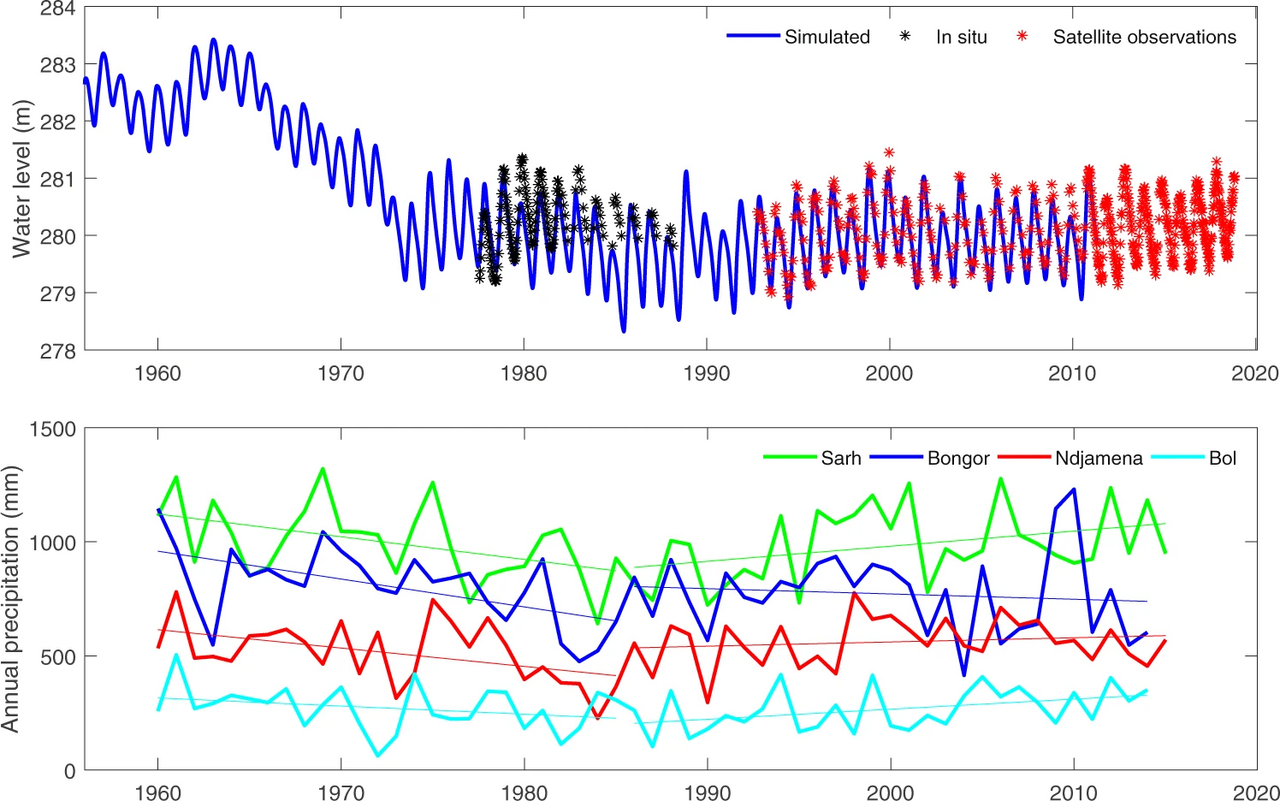
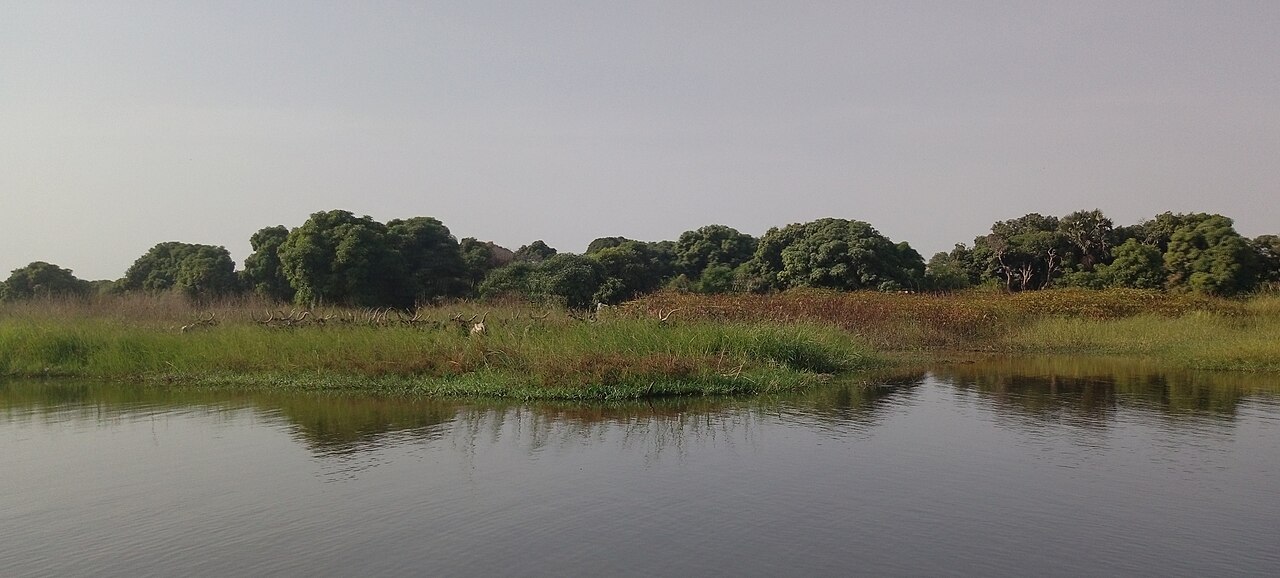
Lake Chad is an endorheic freshwater lake located at the junction of Nigeria, Niger, Chad, and Cameroon in western and central Africa. The lake has undergone significant shrinkage due to climate change and human water diversion, though its water volume has stabilized in recent decades.
- type
- Endorheic freshwater lake
- location
- Junction of Nigeria, Niger, Chad, and Cameroon
- area_in_1980
- 2,000 km²
- average_depth
- 0.5–2 m (south), 0–1.8 m (north)
Lore & Background
This ancient lake flowed into the Benue River via the Mayo Kébbi, draining into the Atlantic. The African humid period allowed lakeside fishing settlements to emerge, and the Nilo-Saharan ethnic group migrated to the region.
Reader's Guide
Lake Chad holds significant historical and ecological importance as a freshwater resource in a semi-arid region, supporting fisheries and wetlands. The lake's prehistory includes Mega-Chad, a vast ancient lake that shaped human settlement and agriculture, with early pearl millet domestication. Politically, the lake was a nexus for trans-Saharan trade, the Kanem and Bornu empires, and Ottoman influence, later divided by European colonial powers. Today, the surrounding nations face environmental challenges due to the lake's decline, compounded by ethnic and political conflicts. The lake remains under threat from climate change, despite recent stabilization.
Did You Know?
- Lake Chad is divided into deeper southern and shallower northern parts by a shallow sill called the Great Barrier.
Geological Birth & the Mega-Chad Epoch
The Chad Basin owes its existence to the depression of the African Shield, a tectonic process that carved out an extensional fault depression rift basin. For much of the Quaternary period, the basin held abundant water, but toward the end of that era, drying climates reshaped the landscape. Its waters even found a path to the Atlantic Ocean, flowing through the Mayo Kébbi into the Benue River and onward via the Niger. The thick diatomaceous earth and lacustrine deposits left behind in the strata remain a testament to that ancient aquatic world.
Cradle of Civilizations & Trans-Saharan Trade
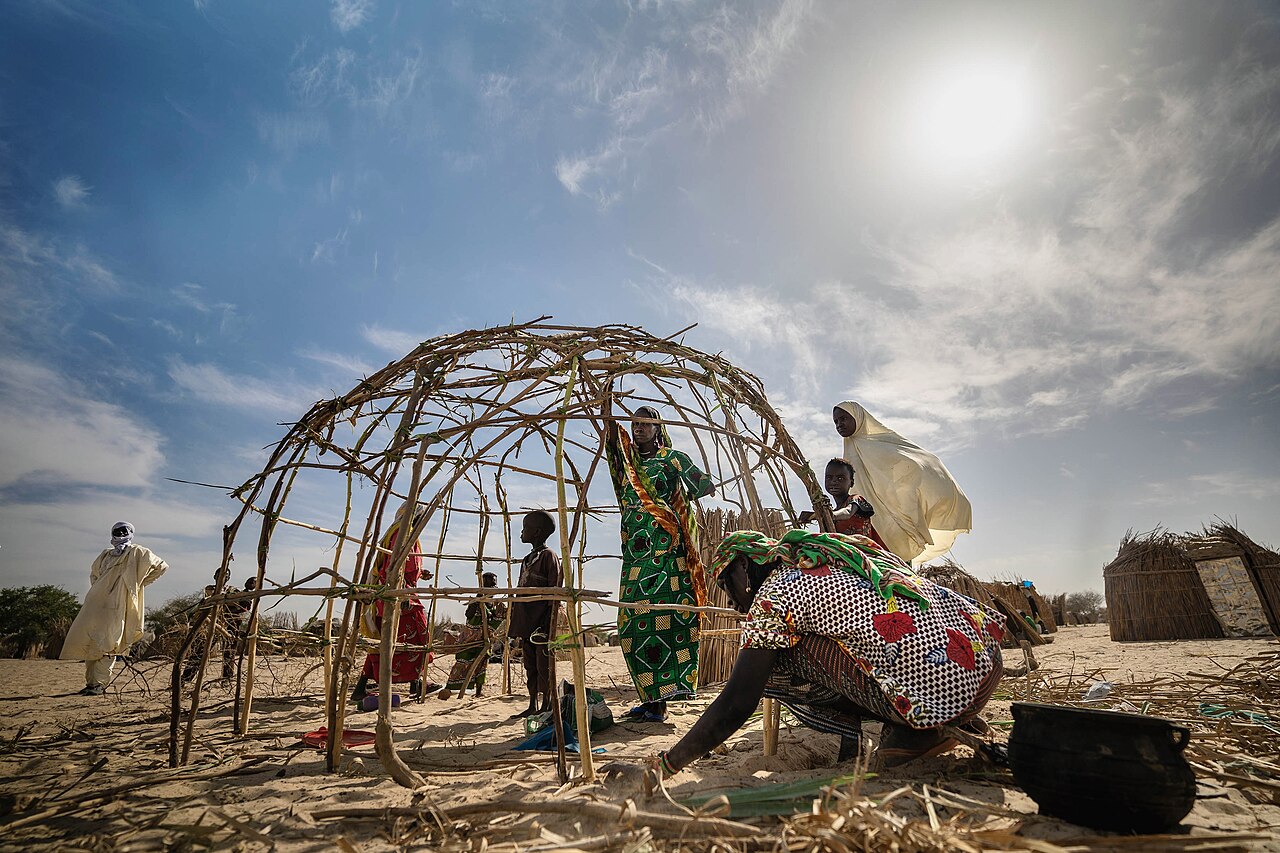
The vast waters of the African humid period set the stage for some of West Africa's earliest human societies. Nilo-Saharan peoples migrated to the lake's shores, where fishing communities took root and agriculture emerged across the Sahel. Permanent villages appeared south of the lake by 500 BC, giving rise to the Sao civilization. Bornu began importing Ottoman firearms in the late 16th century, cementing its military dominance until its 18th-century decline.
The Modern Shrinkage & Fragile Recovery
Lake Chad sits at the crossroads of four nations—Nigeria, Niger, Chad, and Cameroon—draining a catchment area exceeding one million square kilometers. Its waters are fed primarily by the Chari River and its tributaries, and the lake is split into deeper southern sections and shallower northern ones. Water levels swing dramatically with the seasons, and the lake's surface area has always been variable. This rapid contraction devastated the wetland ecosystem that once supported one of Africa's most important freshwater fish-producing regions. Encouragingly, the lake is no longer estimated to be shrinking, as partial rainfall recovery has occurred. Yet the threat is far from over. Climate change continues to loom over the basin, and the lake's stability remains precarious, leaving the millions who depend on its aquatic resources in a state of persistent vulnerability.
Colonial Boundaries & Post-Independence Struggles
Independence did not bring stability. Nigeria and Niger, newly sovereign, endured repeated coups, while Chad was mired in ongoing civil war. The political fragmentation meant that no single authority could coordinate the protection of a shared water body. The inability of the surrounding nations to prioritize the lake's conservation unleashed a cascade of environmental problems that compounded the natural shrinkage. What was once a unified basin, home to empires like Kanem and Bornu and connected to trans-Saharan and Ottoman trade networks, became a patchwork of struggling states, each too consumed by internal conflict to safeguard the wetland ecosystem that had sustained civilizations for millennia.
Gallery
Frequently Asked Questions
What is Lake Chad?
Lake Chad is an endorheic freshwater lake that serves as a major wetland and one of Africa's top freshwater fishing grounds. It sits at the shared border of four nations in western and central Africa.
Where exactly is Lake Chad located?
The lake occupies the junction of Nigeria, Niger, Chad, and Cameroon. Its drainage basin extends over one million square kilometers across the region.
Why is Lake Chad ecologically and economically important?
It supports a rich wetland ecosystem and produces some of the largest freshwater fish catches on the continent. Millions of people across four countries depend on its waters for food, agriculture, and daily life.
What does it mean that Lake Chad is endorheic?
Being endorheic means the lake has no river outlet to the ocean; water is lost only through evaporation and seepage. This makes its level especially sensitive to rainfall changes and upstream water extraction.
More in Rivers And Lakes 1-17
Spotted an error? Know more?
This is a living reference — every entry is fact-audited, and reader corrections feed straight into our audit queue. Suggest an edit · See this site's audit record