Jordan River
A 251-km Levantine river sacred in three major religions.

via Wikipedia: Jordan River · see source
The Jordan River, also known as River Jordan (Arabic: نَهْر الْأُرْدُنّ, Nahr al-ʾUrdunn; Hebrew: נְהַר הַיַּרְדֵּן, Nəhar hayYardēn) and Nahr Al-Sharieat, is a 251-kilometre-long endorheic river in the Levant. It flows roughly north to south through the Sea of Galilee and drains to the Dead Sea, passing by or through Jordan, Syria, Israel, and Palestine. The river holds major significance in Islam, Judaism, and Christianity, and both Jordan and the West Bank derive their names in relation to it.
- Length
- 251 km (156 mi)
- Type
- Endorheic river
- Countries
- Jordan, Syria, Israel, Palestine
- Major significance
- Islam, Judaism, Christianity
- Key biblical events
- Israelites crossed into Promised Land; Jesus baptized by John the Baptist
- Flow (modern)
- Less than 10% of past average; 20–30 million m³/year into Dead Sea (as of 2010)
Verified Timeline
Lore & Background
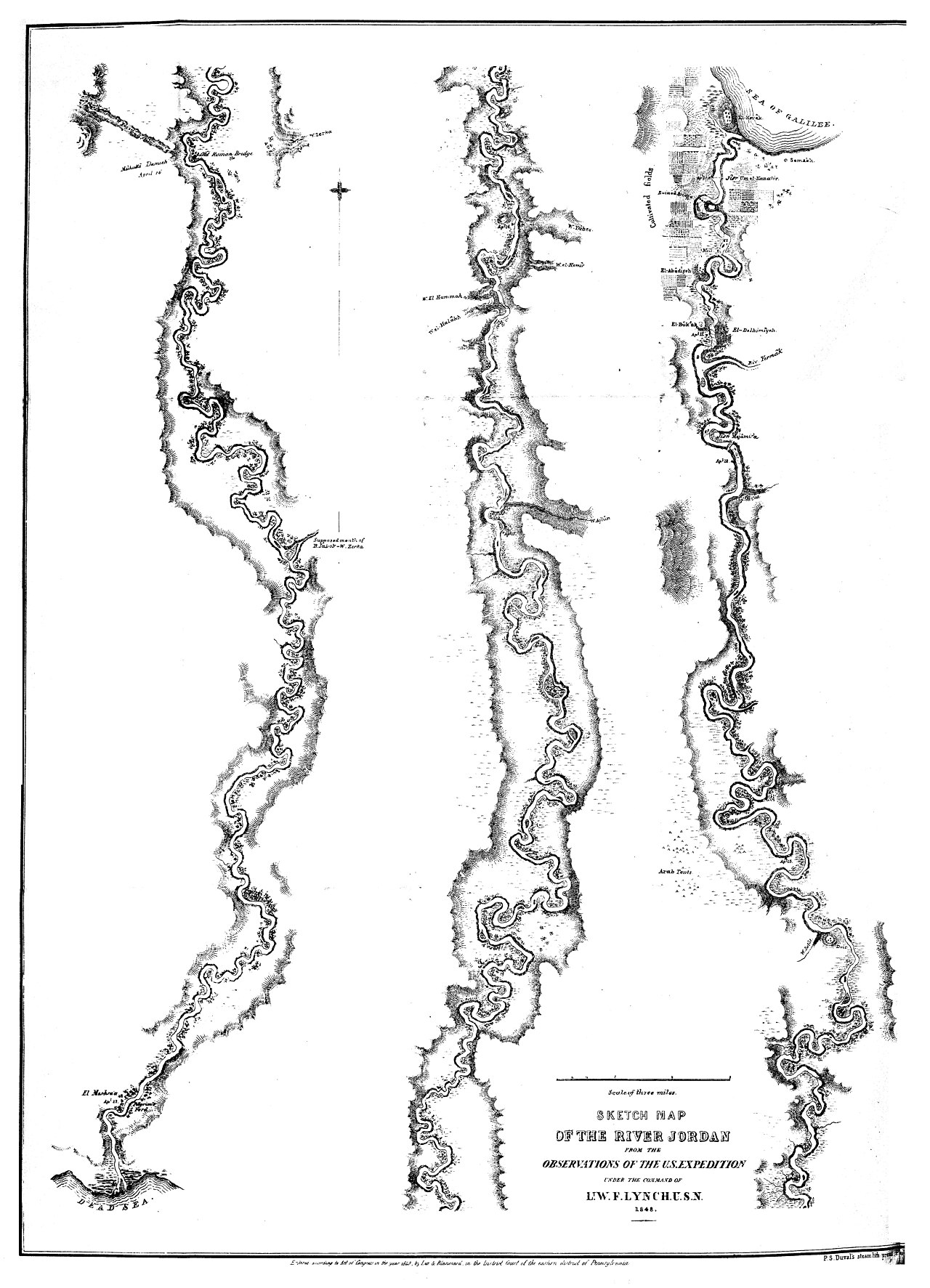
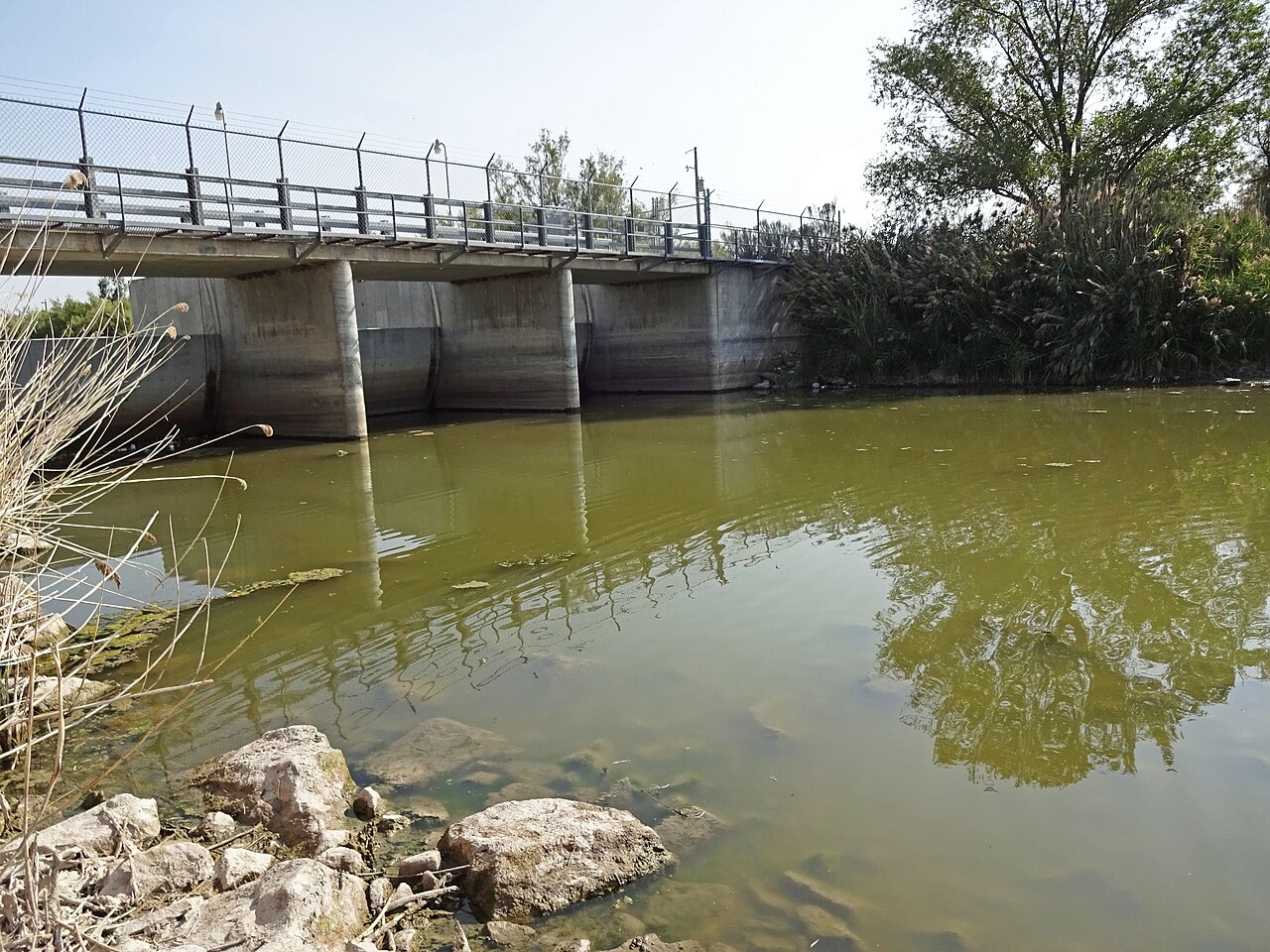
The Jordan River's name likely derives from Semitic 'Yard|on' meaning 'flow down', possibly related to the Egyptian loanword 'yǝʾor' (big river, the Nile). The first recorded use appears as Yārdon in the ancient Egyptian papyrus Anastasi I, dating to the time of Rameses II (c. 1303–1213 BC). Early Arab chronicles referred to it as Al-Urdunn. After the Crusades, the Arabic name Nahr Al Sharieat ('the watering place') began to be used and was recorded by medieval geographers such as Abu'l-Fida and Al-Dimashqi. The river's sources include the Dan, Hasbani, Banias, and Iyyon streams. The Dan is the largest tributary of the upper course, with c. 240–252 million cubic metres per year. The river drops rapidly through the Hula Valley to the Sea of Galilee, then meanders through the Jordan Valley to the Dead Sea. Major tributaries of the lower course include the Yarmouk and Zarqa. In the 19th century, the river was explored by boat by Christopher Costigan (1835), Thomas Howard Molyneux (1847), William Francis Lynch (1848), and John MacGregor (1869). In 1964, Israel began diverting water from the Sea of Galilee via the National Water Carrier, and Jordan constructed a channel diverting water from the Yarmouk to the East Ghor Canal. Syria has also built reservoirs on the Yarmouk. Environmentalists blame Israel, Jordan, and Syria for extensive damage to the Jordan River ecosystem. Up to 95% of the water is now diverted for human purposes, and the flow is less than 10% of the past average.
Reader's Guide
The Jordan River is of profound religious and historical importance. In the Bible, the Israelites crossed it into the Promised Land, and Jesus of Nazareth was baptized by John the Baptist in its waters. Some companions of Muhammad are thought to have been buried along its banks. In Mandaeism, the term Yardena can refer to any flowing water used for baptismal rituals. The river's name has influenced the names of Jordan and the West Bank. Ecologically, the Jordan River basin hosts a unique ichthyofauna from several biogeographic regions, including endemic species such as the Jordan bream and Jordan barbel. However, extensive water diversion for agriculture and industry has reduced its flow to less than 10% of historical levels, and the Dead Sea is rapidly shrinking due to reduced inflow and high evaporation. Introduced fish species threaten native populations. Pollution and habitat degradation remain serious concerns. The river's geography has been shaped by its endorheic nature, flowing into the terminal Dead Sea. Its lower course forms the border between Jordan and Israel, and its upper course passes through the Golan Heights region. The river's historical exploration in the 19th century by Lynch and others contributed to Western knowledge of the region.
Did You Know?
- The first recorded use of the name appears as Yārdon in the ancient Egyptian papyrus Anastasi I, dating to the time of Rameses II (c. 1303–1213 BC).
- In Mandaeism, the term Yardena can refer not only to the Jordan River but also to any body of flowing water used for baptismal rituals.
- The Dan River is the largest tributary of the Jordan's upper course, with c. 240–252 million cubic metres per year.
- Up to 95% of the Jordan River's water is diverted for human purposes, and the flow is less than 10% of the past average.
- In 1964, Israel began operating a pumping station diverting water from the Sea of Galilee to the National Water Carrier, and Jordan constructed a channel diverting water from the Yarmouk to the East Ghor Canal.
Physical Geography & Course
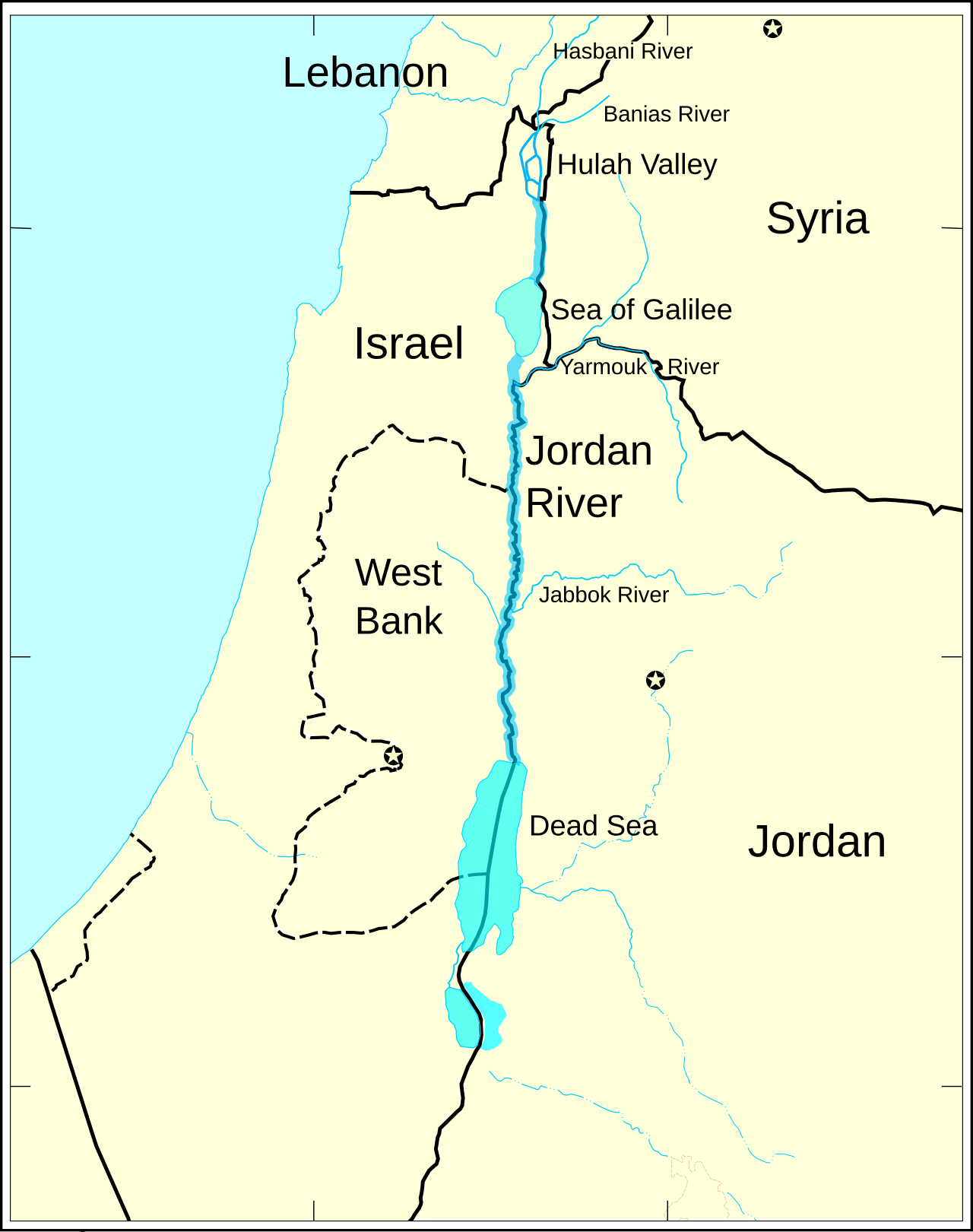
The Jordan River stretches approximately 251 kilometres as an endorheic waterway threading through the Levant from north to south. Its journey begins where the Dan and Hasbani rivers converge near the kibbutz Sde Nehemia in northern Israel. The Dan, the largest upper tributary, contributes roughly 240 to 252 million cubic metres of water annually, while the Hasbani drains from the northwestern slopes of Mount Hermon in Lebanon and the Banias spring adds another 106 million cubic metres. From these sources, the river descends rapidly over 75 kilometres to the once-vast Lake Hula, then plunges a further 25 kilometres into the Sea of Galilee at its northern end. South of the lake, the river sits around 210 metres below sea level and meanders through what is commonly called the Jordan Valley, a 120-kilometre stretch with a gentler gradient of another 210 metres of total drop, before finally emptying into the Dead Sea, a terminal basin roughly 422 metres below sea level with no outlet.
Religious & Spiritual Significance
Few waterways carry the weight of sacred narrative the way the Jordan River does across three major faiths. In the Judeo-Christian tradition, the Bible records the Israelites crossing this very river to enter the Promised Land, an event that anchors the waterway in the collective memory of Judaism. Christianity, in turn, ties its central figure to the river's banks: Jesus of Nazareth is described as having been baptized there by John the Baptist, a moment that inaugurated his public ministry. Islam also claims a connection to the river, as some companions of the Prophet Muhammad are believed to have been laid to rest along its shores. This tripartite spiritual significance makes the Jordan one of the most theologically charged rivers on Earth, a place where the narratives of Judaism, Christianity, and Islam all converge on the same stretch of water. The river's role in these stories has ensured that its name and its waters remain embedded in liturgy, pilgrimage, and theological discourse across centuries and continents.
Etymology & Naming History
The river's name carries a layered linguistic history spanning multiple language families and millennia. The most widely accepted etymology traces 'Jordan' to a Semitic root meaning 'flow down,' a fitting descriptor for a river that drops dramatically from its sources to the Dead Sea. This root appears in cognates across Aramaic, Hebrew, Mandaic, and other Semitic tongues, and may also echo in neighboring river names like the Yarkon and Yarmouk. An alternative theory links the name to an Egyptian loanword for 'big river,' with the suffix 'Den' possibly deriving from the Akkadian word for 'powerful.' The earliest surviving written reference to the name appears as Yārdon in the Anastasi I papyrus, likely dating to the reign of Rameses II around 1303 to 1213 BC. In Mandaean religious practice, the related term Yardena extends beyond this specific river to denote any flowing water suitable for baptismal rituals. Following the Crusades, medieval Arab geographers such as Abu'l-Fida and Al-Dimashqi recorded the Arabic name Nahr Al-Sharieat, literally 'the watering place,' which persisted on 19th-century maps and was noted by Edward Robinson in his Biblical Researches in Palestine.
Political Geography & Borders
The Jordan River is as much a political boundary as a natural one, shaping the territorial identities of multiple nations and territories. To its east lie Jordan and the Israeli-occupied Golan Heights, while to its west stretch Israel and the Israeli-occupied West Bank. The river's influence on regional nomenclature is profound: both the Kingdom of Jordan and the West Bank take their names in direct relation to this waterway. The upper section, north of the Sea of Galilee, falls entirely within Israel's borders and delineates the western edge of the Golan Heights. South of the lake, the river becomes the dividing line between Jordan on the east and Israel on the west. Its largest lower-course tributary, the Yarmouk, similarly serves as a border, first between Syria and Jordan, then between Jordan and Israel. Smaller side wadis and streams from both the eastern and western banks—ranging from Wadi al-'Arab and Wadi Ziqlab on the east to Nahal Yavne'el, Nahal Tavor, and Wadi Qelt on the west—feed into the main channel, each threading through territory defined by these contested boundaries.
Gallery
Frequently Asked Questions
Who is Jordan River?
Jordan River is a 251-kilometre-long endorheic waterway in the Levant that flows roughly north to south through Jordan, Syria, Israel, and Palestine. It passes through the Sea of Galilee before ultimately draining into the Dead Sea.
What are Jordan River's powers/role?
The river serves as a shared sacred site for Islam, Judaism, and Christianity, hosting landmark events such as the Israelites' crossing into the Promised Land and Jesus's baptism by John the Baptist. Its spiritual weight makes it one of the most theologically loaded waterways on Earth.
How does Jordan River's story end?
The river terminates by emptying into the Dead Sea, contributing roughly 20 to 30 million cubic metres of water per year as of 2010. Tragically, modern flow has dropped to under ten percent of its historical average, making its final stretch increasingly fragile.
Why is Jordan River important?
Beyond its triple-faith sanctity, the river is so central to regional identity that both the nation of Jordan and the West Bank take their names in relation to it. Its confluence of religious history, geography, and politics makes it a cornerstone of Levantine culture.
What is Jordan River's route/path?
Originating in the Syrian and Lebanese highlands, the river travels southward through the Sea of Galilee and then along the border regions of Israel, the West Bank, and Jordan before reaching the Dead Sea. This roughly 251-kilometre journey threads through four distinct political territories.
More in Rivers And Lakes 1-17
Spotted an error? Know more?
This is a living reference — every entry is fact-audited, and reader corrections feed straight into our audit queue. Suggest an edit · See this site's audit record