Elbe
Major Central European river flowing from Czech Republic to the North Sea.

Roy Zuo · CC BY-SA 4.0
The Elbe (Czech: Labe) is one of the major rivers of Central Europe, rising in the Giant Mountains of the northern Czech Republic and flowing through Bohemia and Germany before entering the North Sea at Cuxhaven.
- source
- Giant Mountains, Czech Republic (traditionally associated with Labská louka meadow or the slopes of Kotel or Vysoké Kolo)
Lore & Background
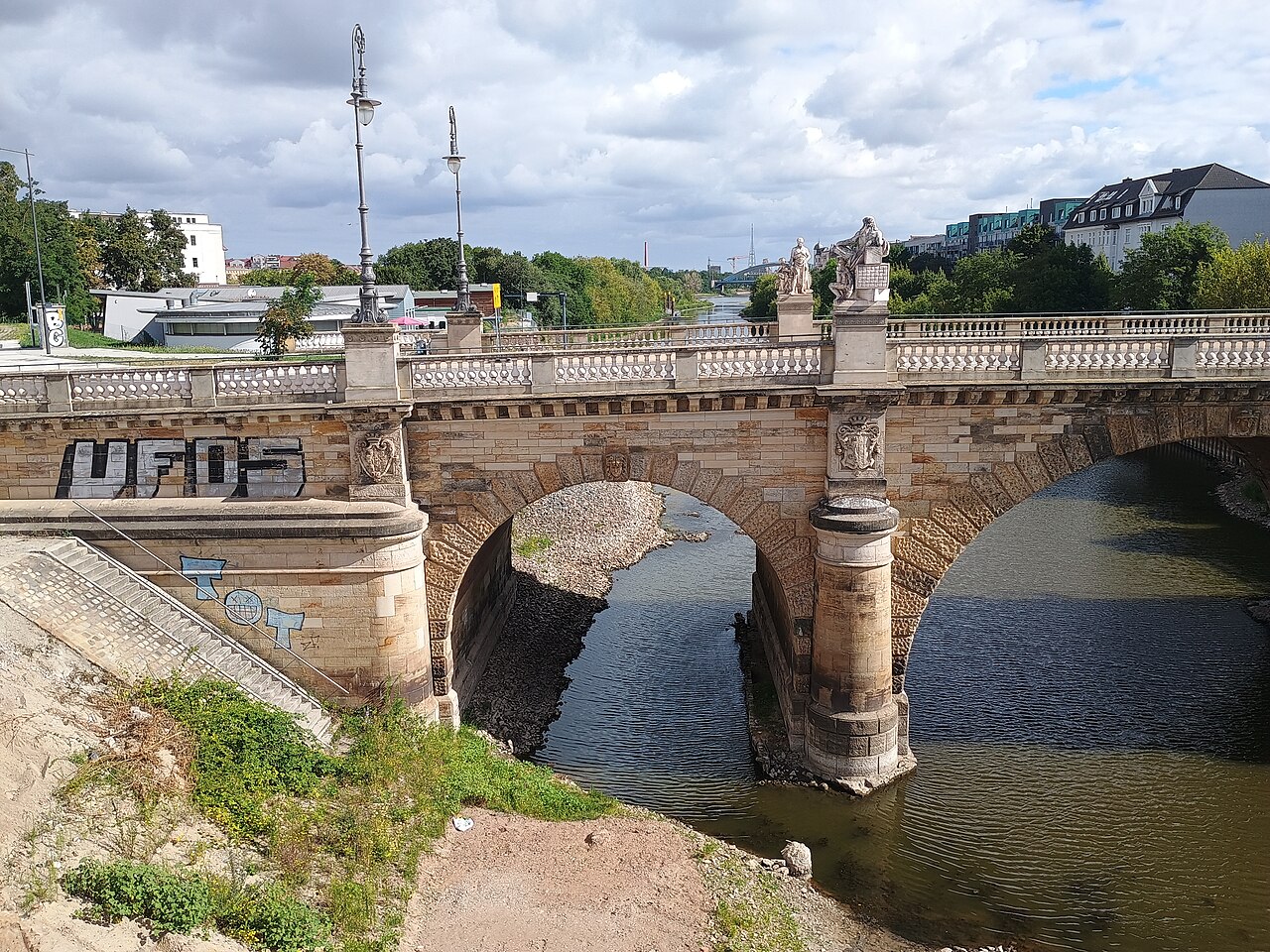
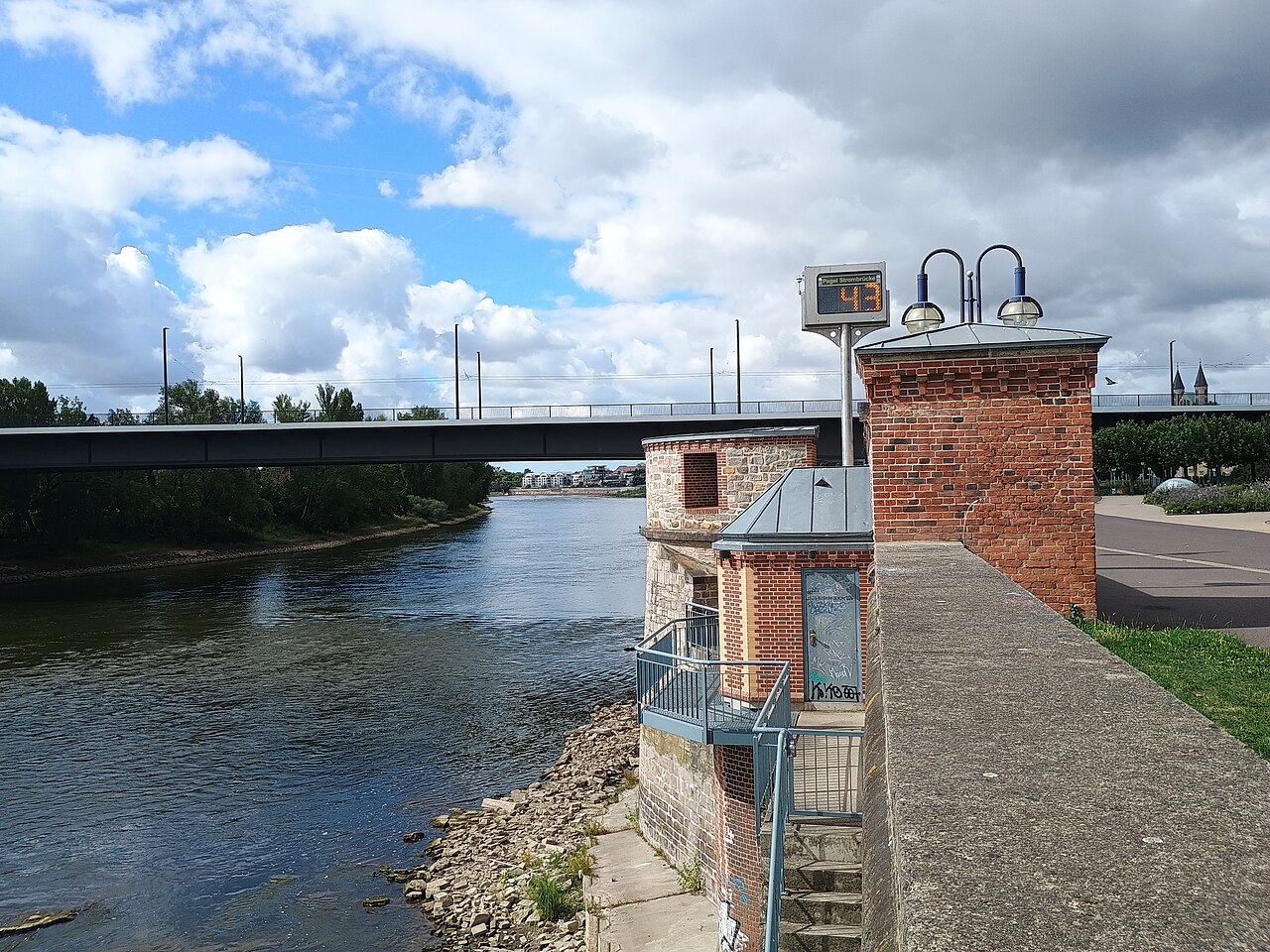
The Elbe traditionally rises in the Giant Mountains, with its source associated with the Labská louka meadow or the slopes of Kotel or Vysoké Kolo, descending the Elbe Falls before being joined by the Bílé Labe. It flows south through the Polabí valley, passing Hradec Králové and Pardubice, then turns west at Kolín and northwest at Mělník, where the Vltava more than doubles its volume. At Litoměřice, the Ohře joins the Elbe, and the river cuts through the Central Bohemian Uplands in a rocky gorge. Crossing into Germany, it flows through the Elbe Sandstone Mountains and continues northwest across the North German Plain, passing Dresden, Meissen, Torgau, Wittenberg, Dessau, Magdeburg, Wittenberge, and Hamburg. The tidal section, the Unterelbe, begins at the Geesthacht sluice, and the river splits into multiple branches in Hamburg, including the Norderelbe and Süderelbe, before reuniting and flowing into the North Sea at Cuxhaven.
Reader's Guide
The Elbe has been navigable by commercial vessels for centuries, providing vital trade links as far inland as Prague. It is connected by canals—the Elbe Lateral Canal, Elbe-Havel Canal, and Mittellandkanal—to German industrial areas and Berlin, and via the Elbe-Lübeck Canal and Kiel Canal to the Baltic Sea. Before German reunification, inland navigation to Hamburg was hindered by the need to pass through East Germany, leading to the construction of the Elbe Lateral Canal. The Magdeburg Water Bridge now allows barges to cross the Elbe without entering the river, mitigating low water levels. The Elbe's basin is inhabited by 24.4 million people, including those in major cities such as Berlin, Hamburg, Prague, Dresden, and Leipzig.
Did You Know?
- The name Elbe derives from the Germanic word *albī, meaning 'river' or 'riverbed'.
- The Magdeburg Water Bridge carries a canal and shipping traffic over the Elbe, allowing barges to cross without entering the river.
The Medieval Pioneer
For nearly five centuries before the modern waterway existed, a far more modest channel linked the same two rivers. This humble watercourse served the Old Salt Route, threading between the towns of Lauenburg and Lübeck. Its significance extends well beyond its local geography. The Stecknitz Canal holds the distinction of being the first summit-level canal built in Europe, and it ranks among the earliest artificial waterways on the continent. For over four hundred years it carried the commercial traffic that the region depended upon, a testament to medieval engineering ambition. Yet by the late nineteenth century, the vessels that needed to pass through it had grown far too deep and wide for its original dimensions, setting the stage for its eventual replacement.
The Imperial Rebuild
Following German unification in the late nineteenth century, the newly formed German Empire embarked on an ambitious program of canal construction across its territory. The aging Stecknitz Canal, though still functional, could no longer accommodate the deeper and wider vessels that modern commerce demanded. Advances in engineering made a complete overhaul feasible. The new route was not built entirely from scratch; portions of the medieval watercourse were incorporated into the modern alignment. The ceremony marked the end of a five-century-old waterway and the beginning of a modern artery that would serve the region for generations to come.
Engineering the Route
Stretching sixty-four kilometres (forty miles) through eastern Schleswig-Holstein, the Elbe-Lübeck Canal traces a path from the city of Lübeck in the north to Lauenburg in the south, threading through the Mölln lakes along the way. Its primary purpose is to bridge the drainage divide between the North Sea and the Baltic Sea, linking the Elbe and Trave rivers into a single continuous inland waterway. The canal's vertical profile is managed by seven locks in total: two locks handle the ascent from the Elbe up to the canal's highest elevation point, while five locks manage the descent from that summit down to the Trave. Every lock chamber shares identical dimensions, with an interior length of eighty metres (two hundred sixty feet) and an interior width of twelve metres (thirty-nine feet). These uniform specifications allowed vessels of a consistent size to navigate the entire route without encountering a bottleneck at any single lock, a design choice that reflected the industrial-era emphasis on standardized throughput.
A Living Waterway
More than a century after its inauguration, the Elbe-Lübeck Canal remains far more than a historical curiosity. It continues to carry substantial freight traffic, serving as a working commercial artery that connects the North Sea and Baltic Sea shipping networks through the heart of Schleswig-Holstein. Alongside its industrial role, the canal has become a popular corridor for pleasure craft, offering boaters a scenic passage through the Mölln lakes and the surrounding landscape. This dual function—commercial freight and recreational navigation—speaks to the canal's enduring practical value. Its existence also represents a direct lineage from the medieval Stecknitz Canal, with segments of the original watercourse still incorporated into the modern route. In a region where canal-building was a hallmark of the newly unified German Empire's infrastructure ambitions, the Elbe-Lübeck Canal stands as a completed and still-active monument to that era of engineering, linking two seas and two cities in a continuous thread of water that has, in one form or another, been in place for over six hundred years.
Gallery
Frequently Asked Questions
Where does the Elbe begin?
The river's headwaters are located in the Giant Mountains of northern Czech Republic, traditionally linked to the Labská louka meadow or the slopes near Kotel and Vysoké Kolo.
Which countries does the Elbe flow through?
The river's catchment area spans four nations, with the majority of its course running through the Czech Republic and Germany. It rises in Bohemia, crosses the border into Germany, and continues northward to the sea.
Where does the Elbe empty into the sea?
The Elbe discharges into the North Sea at Cuxhaven, a point on Germany's northwestern coastline.
More in Rivers And Lakes 1-17
Spotted an error? Know more?
This is a living reference — every entry is fact-audited, and reader corrections feed straight into our audit queue. Suggest an edit · See this site's audit record