
Krishna River
Tributary of the Krishna, lifeline of Maharashtra, home to India's 2nd largest hydroelectric project.

via Wikipedia: Koyna River · see source
The Koyna River is a tributary of the Krishna River which originates in Mahableshwar, Satara district, western Maharashtra, India. It rises near Mahabaleshwar, a famous hill station in the Western Ghats. Unlike most of the other rivers in Maharashtra which flow in an East-West direction, the Koyna river flows in a North-South direction. The Koyna River is famous for the Koyna Dam and the Koyna Hydroelectric Project, the 2nd largest completed hydroelectric project in India. The reservoir – Shivasagar Lake, is a huge lake of 50 km in length. Due to its electricity generating potential through Koyna Hydroelectric Project, Koyna river is known as the Lifeline of Maharashtra. The river meets the Krishna River, which is one of the three largest rivers in southern India, by Karad at Pritisangam.
- length
- 1,400 km (870 mi)
- origin
- Western Ghats near Mahabaleshwar, Maharashtra, at 1,300 m elevation
- basin_area
- 258,948 km²
- states_flowed_through
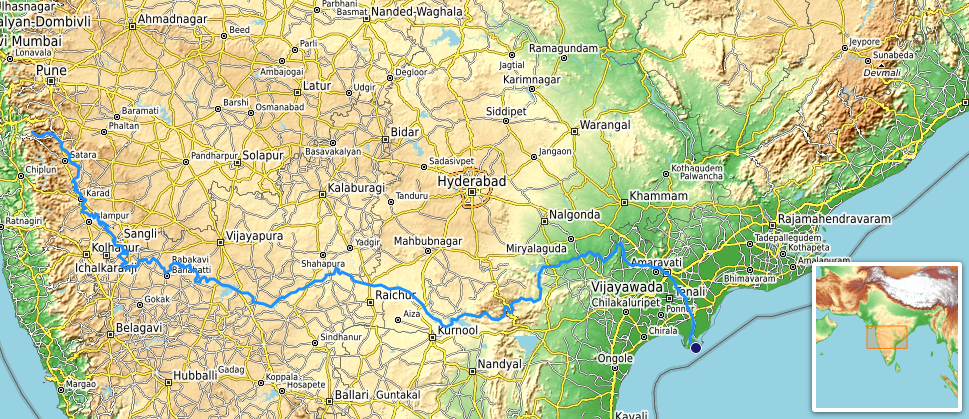
- Maharashtra, Karnataka, Telangana, Andhra Pradesh
- longest_tributary
- Bhima River (861 km)
- average_annual_water_availability
- 86.32 billion cubic meters
- culturable_area_in_basin
- 203,000 km²
Lore & Background
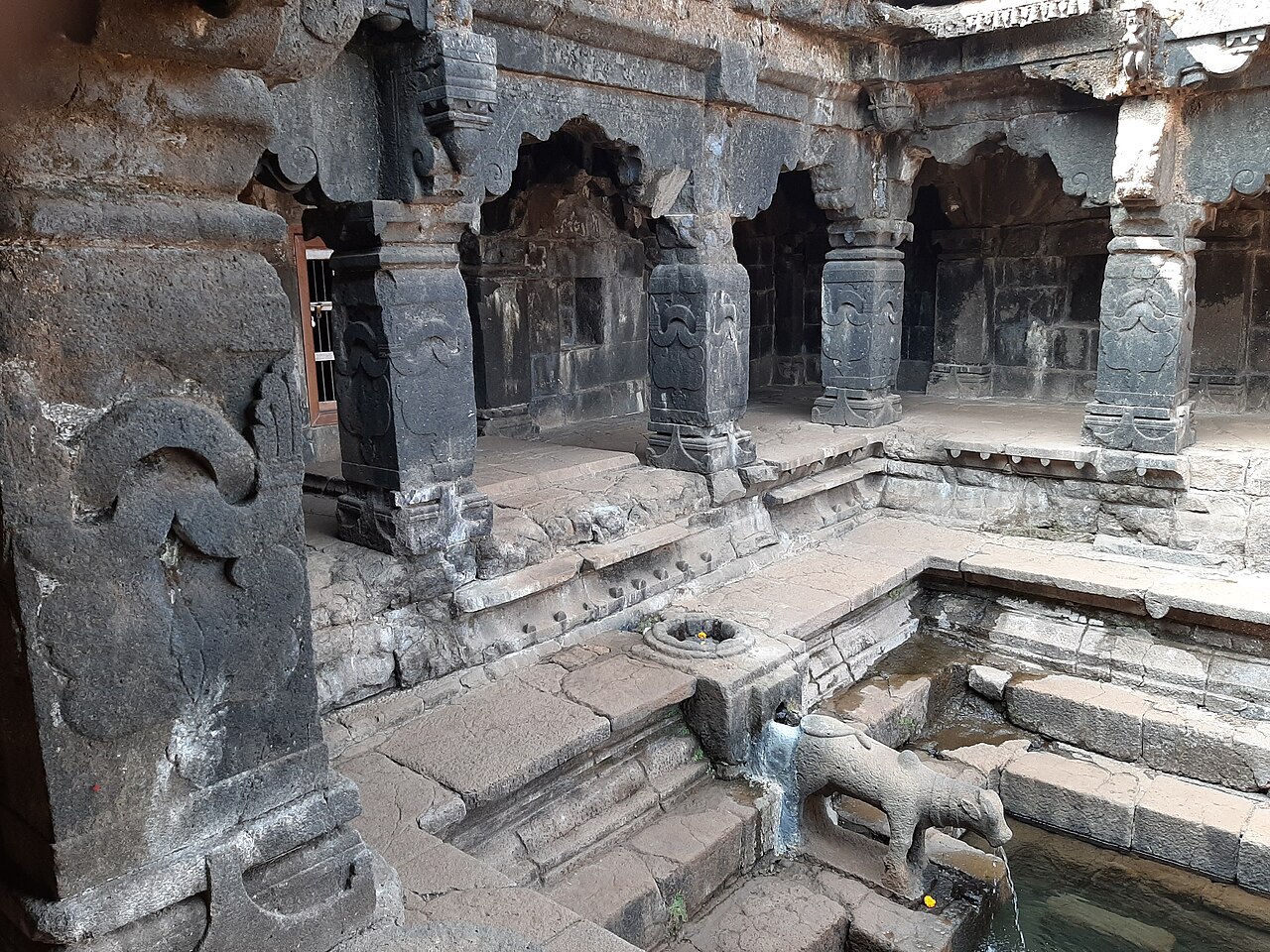
The legendary source of the Koyna River is a spout from the mouth of a statue of a cow in the ancient temple of Mahadev in Old Mahabaleshwar. Mahabaleshwar is the source of five rivers: Krishna, Koyna, Venna (Veni), Savitri, and Gayatri, all emerging at the Panchaganga temple. Legend has it that Krishna is Lord Vishnu himself as a result of a curse on the trimurtis by Savitri, while its tributaries Venna and Koyana are said to be Lord Shiva and Lord Brahma themselves. An interesting thing to notice is that four other rivers including Koyna come out from the cow's mouth apart from Krishna and they all travel some distance before merging into Krishna. The biggest river Krishna River flows across Maharashtra, Karnataka and Andhra Pradesh.
Reader's Guide
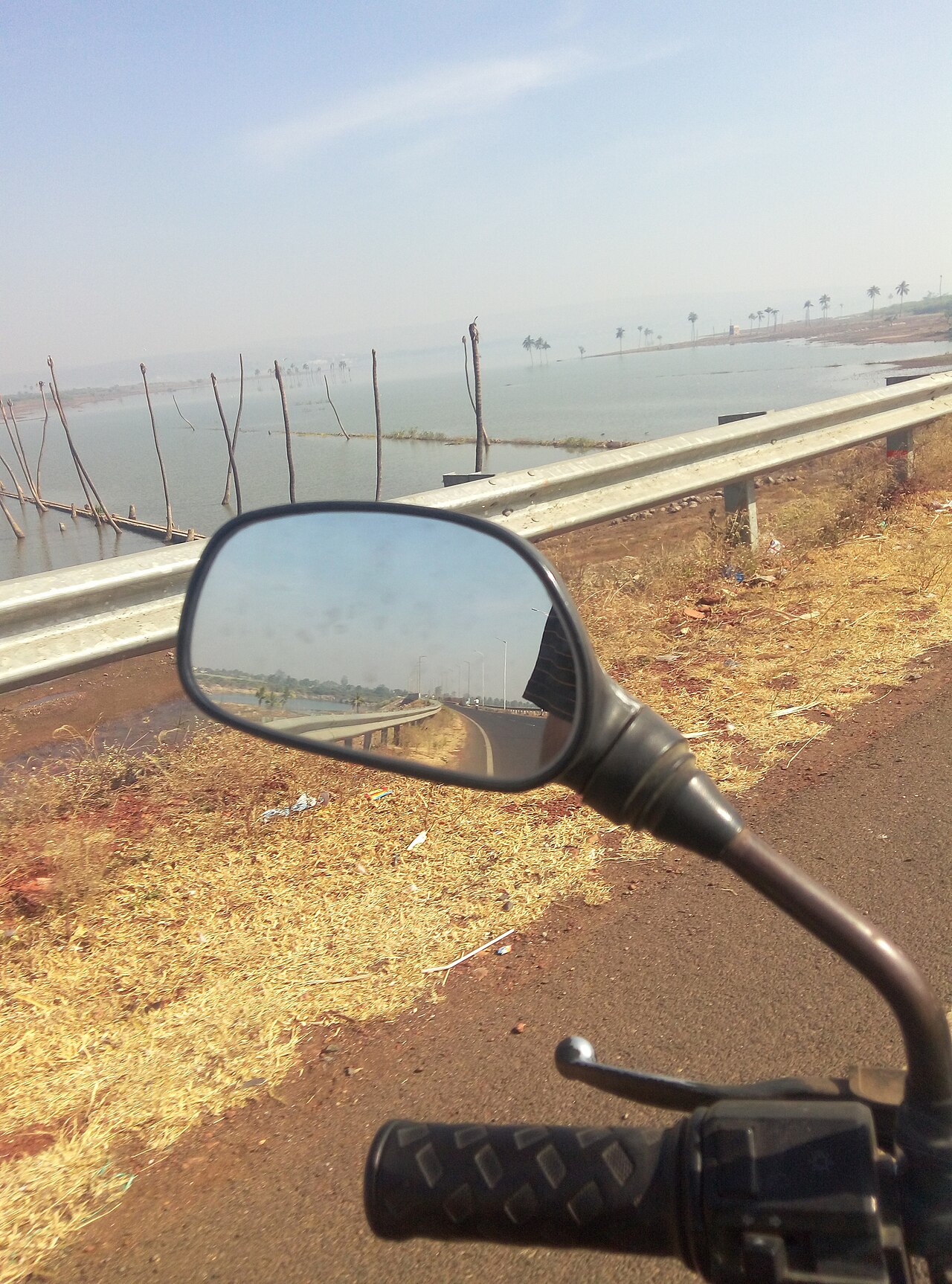
The Koyna River is just about 100 meters in width and is slow-flowing. It is an olive shade of green during the dry months and a bluish-brown in the monsoon months attributed to much algae and aquatic plant life. The impounded water of the Koyna Dam has submerged a significant amount of rainforest of the Western Ghats, but it has helped the surrounding forest by supplying water all year round. Hence a wide biodiversity of plants and animals is observed in the evergreen forest surrounding the river. The Koyna Hydroelectric Project is the 2nd largest completed hydroelectric project in India, and the reservoir – Shivasagar Lake – is a huge lake of 50 km in length. The river meets the Krishna River at Pritisangam near Karad.
Did You Know?
- The Koyna River flows in a North-South direction, unlike most other rivers in Maharashtra which flow East-West.
- The Koyna Hydroelectric Project is the 2nd largest completed hydroelectric project in India.
- Shivasagar Lake, the reservoir created by the Koyna Dam, is 50 km in length.
- The river is just about 100 meters in width and is slow-flowing.
- The Koyna River meets the Krishna River at Pritisangam near Karad.
Geography and Seasonal Character
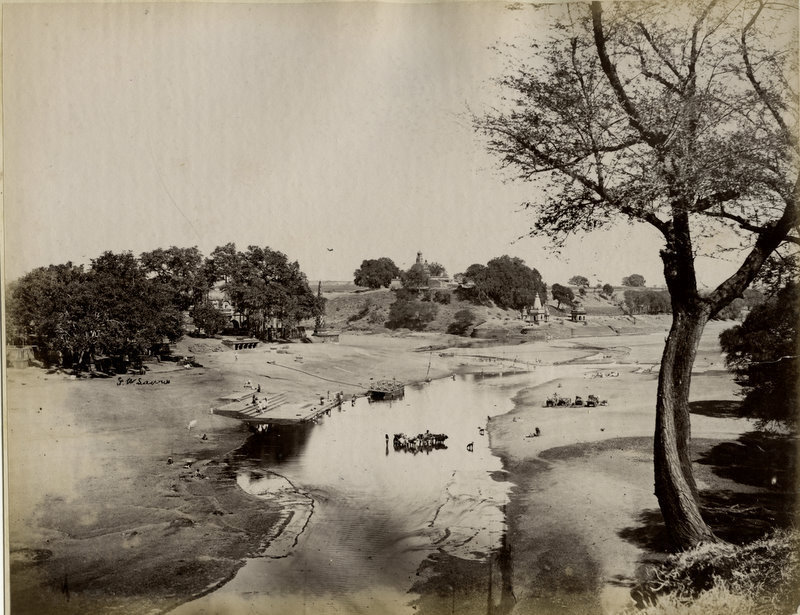
The Koyna River draws its first waters from the slopes of Mahabaleshwar, a celebrated hill station nestled in the Western Ghats of Satara district, western Maharashtra. What sets this waterway apart from its regional neighbors is its orientation: while the majority of Maharashtra's rivers carve their paths in an east-to-west trajectory, the Koyna carves a distinctly north-to-south course through the landscape. The channel itself is modest in scale, measuring roughly one hundred meters across, and it moves at a gentle, unhurried pace. Its visual character shifts dramatically with the seasons. During the dry months, the water takes on a muted olive-green hue, while the monsoon transforms it into a bluish-brown, a change driven by the proliferation of algae and submerged aquatic vegetation. The river's journey concludes at Pritisangam, near the town of Karad, where it surrenders its waters into the Krishna, one of the three great rivers of southern India.
The Hydroelectric Lifeline of Maharashtra
Few rivers in India carry as much practical weight for their surrounding state as the Koyna does for Maharashtra. The river's considerable electricity-generating capacity, harnessed through the Koyna Hydroelectric Project, has earned it the evocative title of the Lifeline of Maharashtra. This project stands as the second-largest completed hydroelectric undertaking in the entire country, a testament to the river's sustained flow and the engineering ambition directed at its waters. The dam itself has created Shivasagar Lake, a vast reservoir stretching fifty kilometers in length, which fundamentally reshaped the terrain it occupies. Beyond raw power generation, the impounded waters have served as a year-round water supply to the surrounding forested regions, a benefit that has sustained ecosystems which might otherwise have struggled through dry periods. The Koyna thus occupies a dual role: a critical energy source for millions of residents and a lifeline for the natural environment that fringes its course.
The Panchaganga Legend and Divine Origins
According to local legend, the Koyna does not simply spring from a source in the ground. Its true origin lies in the ancient Mahadev temple in Old Mahabaleshwar, where water is said to gush from the mouth of a stone cow statue. This is the Panchaganga, the confluence point from which five rivers—Krishna, Koyna, Venna, Savitri, and Gayatri—emerge before traveling separate paths and eventually rejoining the Krishna. The mythology assigns divine identities to each stream: Krishna is understood to be Lord Vishnu himself, transformed by a curse placed upon the trimurtis by Savitri. The tributaries Venna and Koyana are regarded as the incarnations of Lord Shiva and Lord Brahma respectively. A striking detail in the legend is that four rivers, including the Koyna, flow out from the cow's mouth alongside the Krishna, each traveling a distance of its own before merging back into the great river. The Panchaganga temple in old Mahabaleshwar remains the recognized source point for all five.
Ecology, Submergence, and Western Ghats Biodiversity
The relationship between the Koyna's impounded waters and the surrounding Western Ghats ecosystem is a study in trade-offs. The creation of the Koyna Dam reservoir undeniably submerged a significant stretch of the region's rainforest, a loss that cannot be overlooked. Yet the same reservoir has become a vital water source for the surrounding forest, delivering moisture throughout the year rather than only during the monsoon. This consistent availability of water has supported a remarkably wide biodiversity of both plant and animal life within the evergreen forest that borders the river. The river's own water teems with algae and aquatic plant life, visible in the seasonal color shifts from olive-green in the dry season to bluish-brown during the rains. The result is a corridor of biological richness that stretches along the river's course, showing how human engineering, for all its disruption, can also create new conditions for ecological abundance in the Western Ghats.
Gallery

Frequently Asked Questions
What is the Krishna River?
The Krishna River, also known as Krishnaveni, is a major waterway in southern India that ranks as the third-longest river in the country, behind only the Ganga and Godavari. It traverses the Deccan Plateau and is considered sacred by Hindu devotees.
How long is the Krishna River and where does it empty?
The river covers roughly 1,400 kilometers (about 870 miles) from its highland source to its mouth. After crossing the Deccan Plateau, it ultimately discharges into the Bay of Bengal.
Where does the Krishna River originate?
The river begins in the Western Ghats at an elevation of approximately 1,300 meters, near the town of Mahabaleshwar in Maharashtra. That highland starting point gives it a long, sustained course across the plateau before it reaches the sea.
Why is the Krishna River important to India?
It supplies critical irrigation water to the agricultural heartlands of Maharashtra, Karnataka, Telangana, and Andhra Pradesh, with an average annual availability of around 86.32 billion cubic meters. Beyond its practical value, the river carries deep spiritual significance and is revered as sacred by Hindus.
What is the Krishna River's longest tributary?
The Bhima River, stretching 861 kilometers, is the most significant tributary feeding into the Krishna system. Together they form a vast basin spanning roughly 258,948 square kilometers.
More in Rivers And Lakes 1-17
Spotted an error? Know more?
This is a living reference — every entry is fact-audited, and reader corrections feed straight into our audit queue. Suggest an edit · See this site's audit record